
Securitization without Security:
How Migration is Shaping the Global Order
StoryMaps
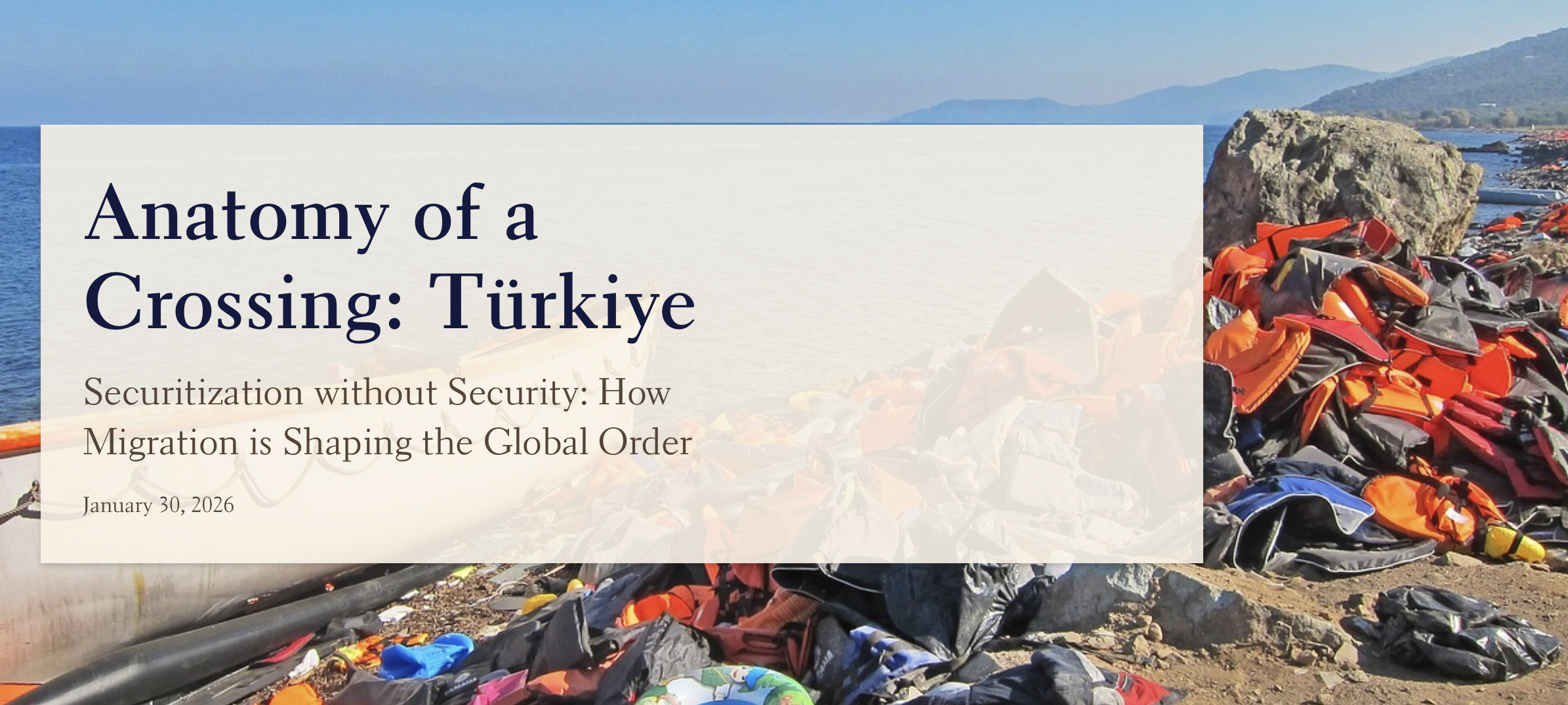
Anatomy of a Crossing: Türkiye
Türkiye occupies one of the most strategically consequential positions in the contemporary migration system: it bridges the instability of South Asia and the Middle East with the relative safety of the European Union. Its 2,750-kilometre land border and extensive Aegean coastline channel two of the world's most active irregular routes, the Eastern Mediterranean and the Western Balkan. At the same time, over the past decade these corridors have hardened from porous thresholds into closely monitored and aggressively policed pathways. The country now hosts the largest refugee population in the world, a position that has made it at once a transit hub for those moving toward Europe and a focal point for the externalisation of European border control. These dynamics lie at the heart of the Securitization without Security project, which examines how U.S. and EU efforts to externalise migration enforcement can empower non-state actors, sustain illicit political economies and reshape political landscapes within key transit states.
Our third StoryMap, Anatomy of a Crossing: Türkiye, traces this transformation from the eastern mountain passes around Van to the western chokepoints of the Aegean. It situates Türkiye's enforcement geography within the migration diplomacy framework to show how Türkiye has progressively converted its structural position in global migration flows into diplomatic leverage, most visibly through the 2016 EU-Türkiye Statement and the 2020 Evros border crisis. Overall, it argues that any purely enforcement-based European response will remain incomplete so long as the underlying political bargain endures.
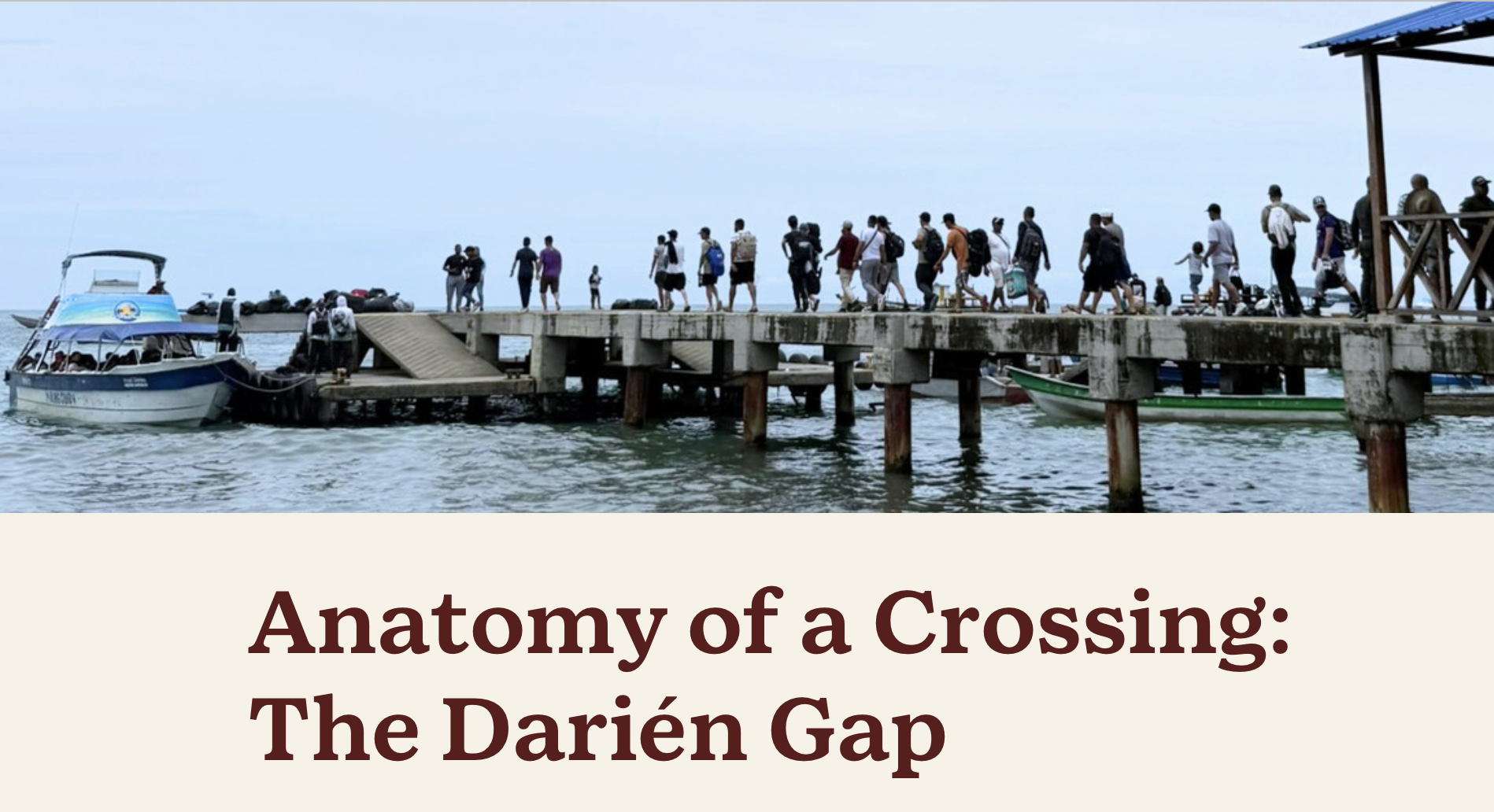
Anatomy of a Crossing: The Darién Gap
Our second StoryMap traces the journeys migrants take from their countries of origin through the Darién Gap, a narrow land bridge connecting South and Central America, on their way north, and in some cases, on their return journeys south. More broadly, it examines how migration trajectories across the Americas are shaped by evolving policies. It suggests that securitized migration policies do not simply restrict movement but can also reconfigure routes and influence the roles of both state and non-state actors along the journey. In doing so, such policies contribute to the emergence of new migration dynamics, including the formation of chokepoints where migrants experience prolonged waiting periods and heightened uncertainty, as well as shifting opportunities for illicit and local actors. In turn, these dynamics can affect the costs and risks faced by migrants themselves.
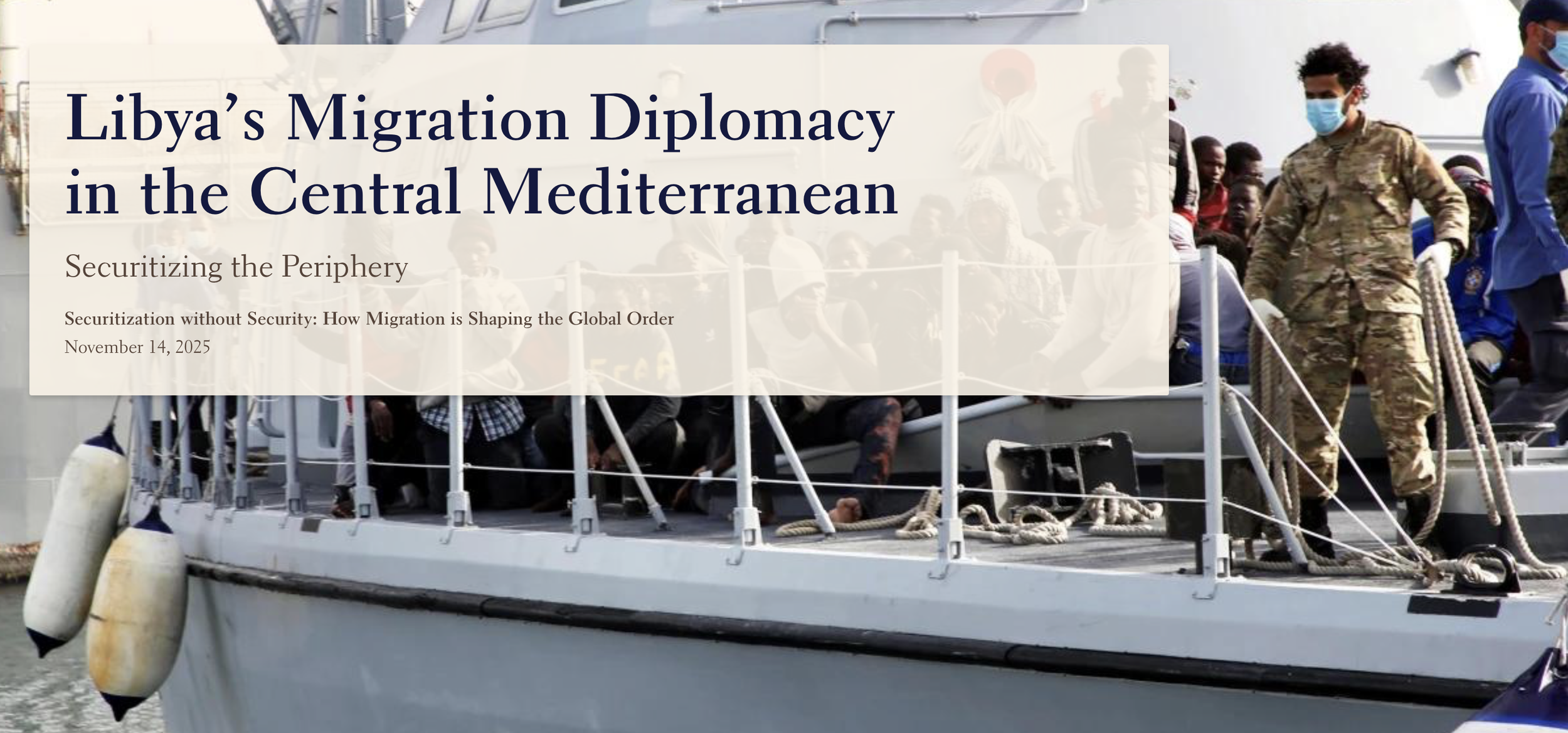
Libya’s Migration Diplomacy in the Central Mediterranean
Libya sits at a strategic crossroads between North Africa, the Sahel, and the Mediterranean— an intersection that has made it both a major transit hub for migrants traveling toward Europe and a focal point for international border control efforts. Along the central Mediterranean route, Libya’s transport networks and desert corridors form some of the world’s most securitized migration pathways. These dynamics lie at the heart of the Securitization without Security project, which examines how U.S. and EU efforts to externalize migration enforcement can empower non-state actors, sustain illicit political economies, and reshape political landscapes within key transit states.
Our first StoryMap visually narrates Gerasimos Tsourapas’ report, Libya’s Migration Diplomacy in the Central Mediterranean, which explores Libya’s role in global migration diplomacy and the governance of mobility across its territory.
Contact Us
Henry J. Leir Institute for Migration and Human Security
The Fletcher School of Law and Diplomacy
Tufts University
160 Packard Ave.
Medford, MA 02155 USA