
Securitization without Security:
How Migration is Shaping the Global Order
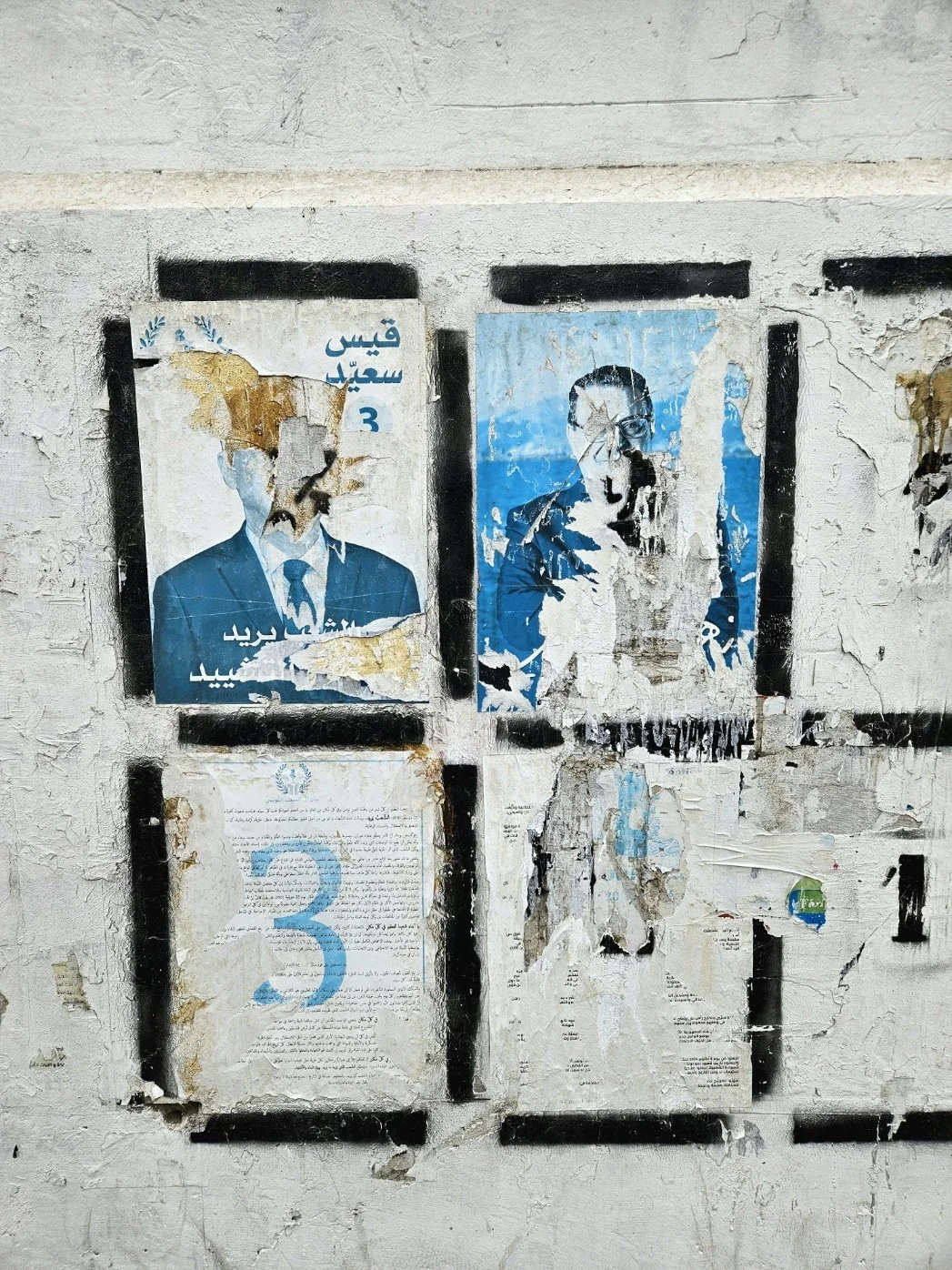
notes from the field - Tunis #3
Speaking Out in a Civil Society Under Pressure
Author: Andrew Fallone
Location: Tunis, Tunisia
Date: April 1, 2026

Walking through Centre Ville in downtown Tunis, past a mural of the first woman to lead a Tunisian political party, Maya Jribi, past the statue of the Tunisian-born founder of sociology, Ibn Khaldûn, flanked by red and white flags fluttering in the breeze, I try to take stock of civil society actors who faced censure or arrest for advocating for policy changes that they see as important for the future of the country. I’m on my way to meet with civil society representatives walking the delicate tightrope of advocating for changes they see as so consequential that they cannot be ignored, while also not speaking out to such an extent that their organization is forced to close or they are personally imprisoned.
One week before this fieldnote was written in Tunis, the prominent Tunisian civil society activist Saadia Mesbah, who campaigned to end discrimination against Black Tunisians and people on the move, was sentenced, alongside her son, to eight years in prison and fined more than $30,000 under charges of financial impropriety and money laundering. She had already been imprisoned since May of 2024. Her name is but one of a long list of people and organizations who have faced serious consequences for their activism.

Abdullah Al Saïd, Abdul Razzaq Alkuraimi, Ayyad Bousalmi, Imen El Ouardani, Mohammed Iqbal Khalid, Mohamed Jajoo, Mustafa Al Jamali, Salwa Gharissa, and Sharifa Riahi, just to say a few. The Tunisian Council for Refugees and the Tunisian branch of the French migrants’ rights advocacy group ‘Terre d’Asile’ both ceased operating in 2024. Many of the organizations impacted were active on topics that extend far beyond migration and worked to advance the rights of all Tunisians, such as the Association Tunisienne des Femmes Démocrates, the Organisation Contre la Torture en Tunisie, and the Forum Tunisien pour les Droits Économiques et Sociaux. Abdullah Al Saïd’s organization in Médenine, Enfants de la Lune, focused on children with the genetic skin disease xeroderma pigmentosum. This list doesn’t include organizations that ceased providing services to people on the move to avoid condemnation, or people who gave up their activism to avoid arrest.
The representative of the organization I meet with explained how he sees the pressure on civil society as a phenomenon that is not unique to Tunisia, referencing how it was learned by first seeing Salvini’s criminalization of NGOs working to rescue migrants at sea in Italy, and by seeing how Orbán targeted NGOs with his ‘Stop Soros’ law. This representative tells me that, in their view, Tunisian civil society organizations failed by endeavoring to contradict state political narratives about migration with empirical evidence. They told me this evidence alone wasn’t enough to surmount the incipient individualism that they see as emerging from current economic challenges, an individualism that breaks down the power of civil society.
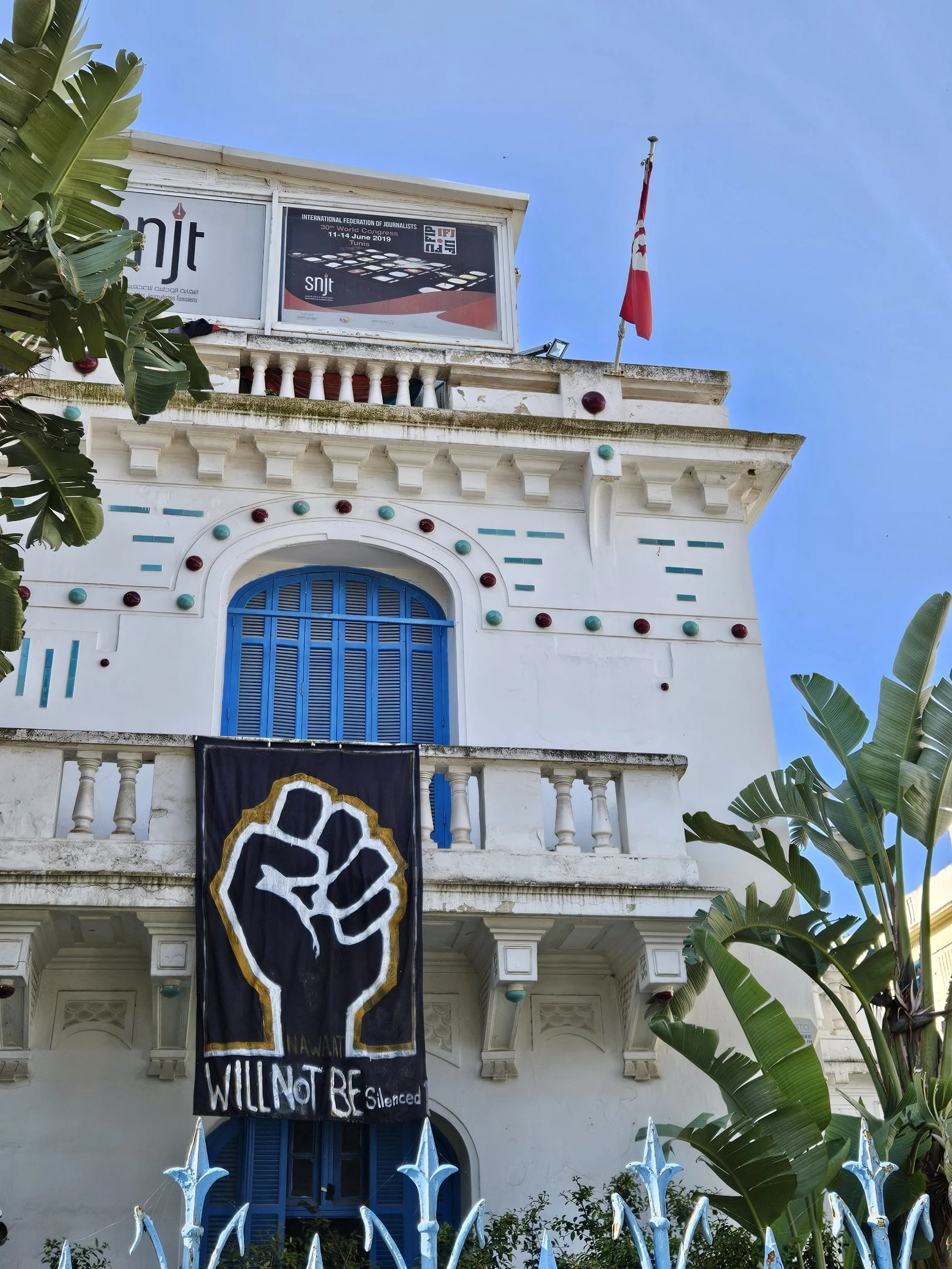
News outlets such as Radio Mosaïque FM and Nawaat experienced further challenges to their reporting, with the founder of one arrested and the other ordered to temporarily suspend activities. Speaking with a journalist at a prominent Tunisian news outlet, they tell me that “there have also been legal cases targeting journalists who have worked on the issue of migration. And that’s why the topic of migration itself has become almost taboo, and why people are sometimes afraid to discuss it.”
Despite the confluence of all these pressures, people still speak out and advocate for the future that they see as better. On April 11th, days after I left Tunis, friends sent me photos of people marching against anti-black discrimination and racism, sentiments which many tie to the EU’s externalization of migration control. A man in the photo holds a sign depicting an EU flag that is crossed out in red, and below it, in Arabic, it simply reads “Tunisia is not for sale”.